Do Heat Pumps Work Year-Round in West Palm Beach, FL?
Heat pumps in West Palm Beach, FL can cool and heat your home efficiently all year in South Florida's warm, humid climate.
How Does a Heat Pump Work Inside Your Home?
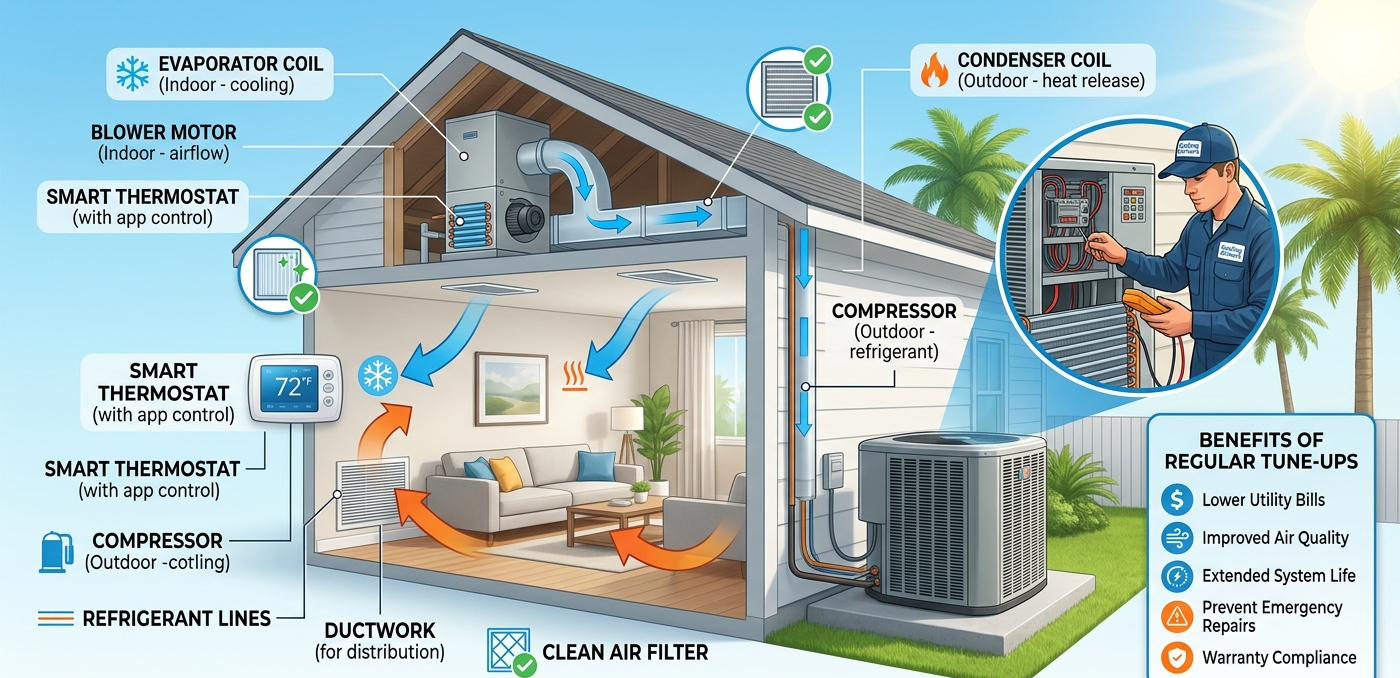
A heat pump moves warm air from one place to another rather than burning fuel to generate heat, which makes it one of the most energy-efficient systems available for Florida homes. In summer, it pulls heat from inside your home and transfers it outdoors. In winter, it reverses that process and draws warmth from the outdoor air to keep your rooms comfortable.
This two-way capability is exactly what makes heat pumps such a practical choice in South Florida, where winters are mild and the cooling season stretches through most of the year. You get reliable performance in every season without maintaining separate heating and cooling equipment. For many homeowners, that means a simpler setup with fewer components to service.
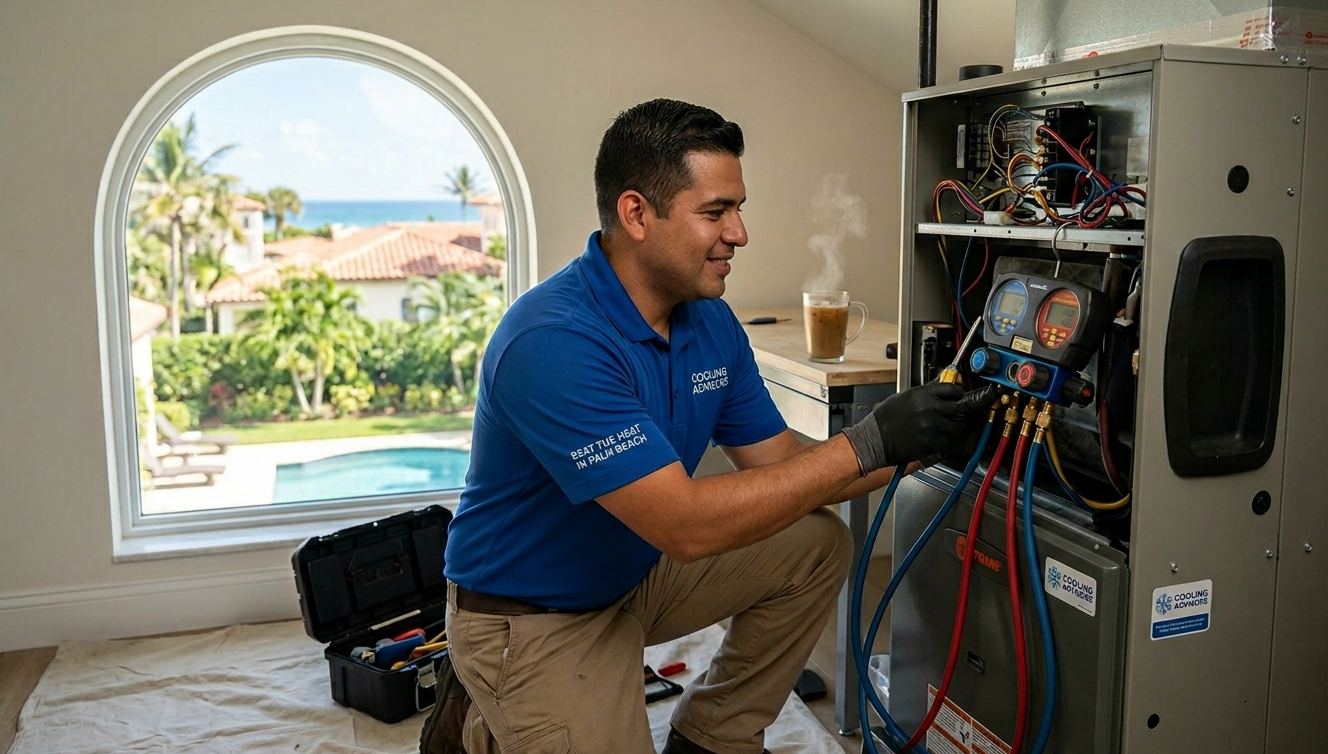
Cooling Advisors' licensed and certified HVAC technicians use the latest diagnostic tools to properly size and install heat pump systems based on your home's layout, insulation, and square footage. Getting the sizing right from day one is one of the most important factors in long-term efficiency and comfort. Learn more about your options on our heat pump services in West Palm Beach page.
Are Heat Pumps More Efficient Than Standard AC Systems in West Palm Beach, FL?
Yes, heat pumps are typically more energy-efficient than traditional split systems in South Florida because they move heat rather than generate it, requiring significantly less electricity to deliver the same level of comfort.
In a climate like West Palm Beach, where outdoor temperatures rarely drop below 40 degrees Fahrenheit, heat pumps operate near their peak efficiency all year. Traditional furnaces are built for colder regions where generating heat from fuel makes more sense. In South Florida, that kind of extreme cold is uncommon, so a heat pump handles both your cooling and light heating needs using far less energy than separate systems would.
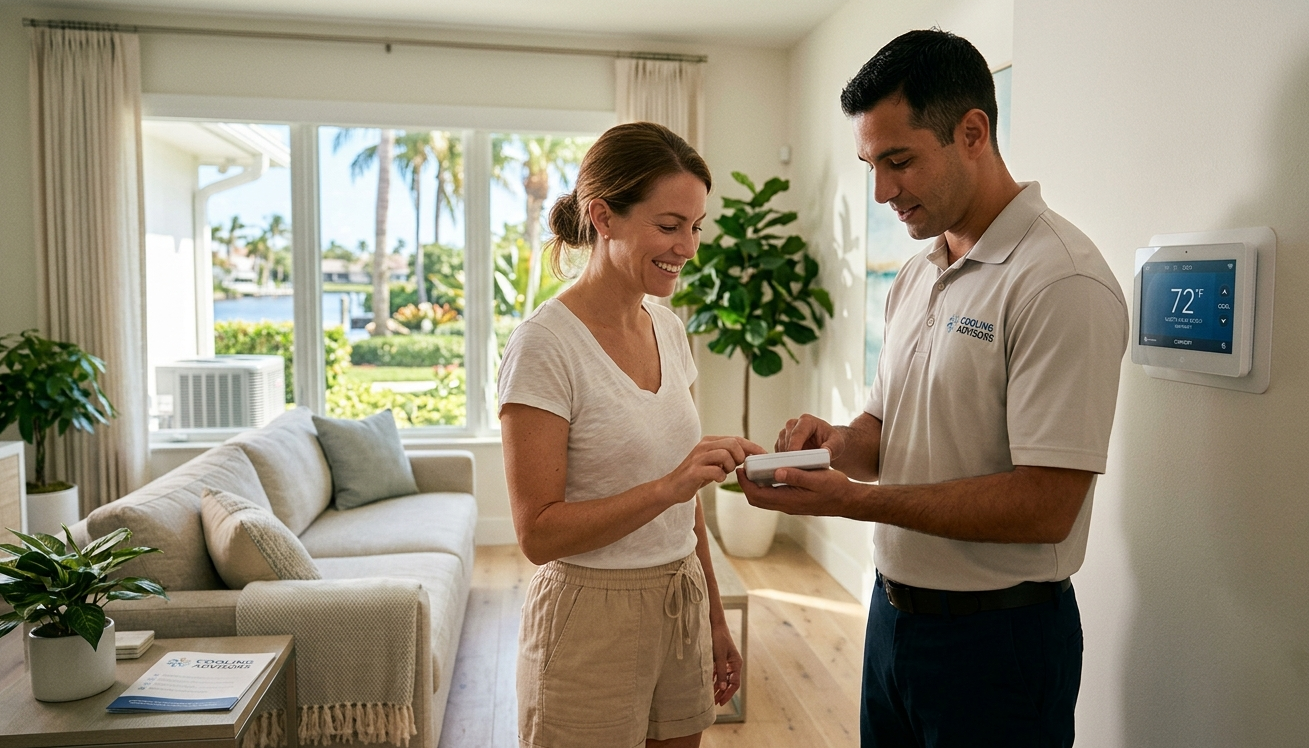
Pairing your heat pump with a programmable or smart thermostat can extend those savings even further. Scheduling setbacks for times when the house is empty or letting the system adjust automatically based on your daily routine helps cut unnecessary runtime. Cooling Advisors can walk you through thermostat options that pair well with your specific system during any installation or service visit.
When Is It Time to Replace Your Existing Heat Pump?
Most heat pumps have a lifespan of around ten to fifteen years before performance starts to decline and repair costs begin to climb.
If your system is within that age range and you are noticing rising energy bills, uneven temperatures from room to room, or more frequent repair calls than in previous years, those are signals worth paying attention to. At some point the cost of keeping an aging system running exceeds the investment in a modern replacement. A newer, high-efficiency model can often pay for itself through lower operating costs within just a few years.
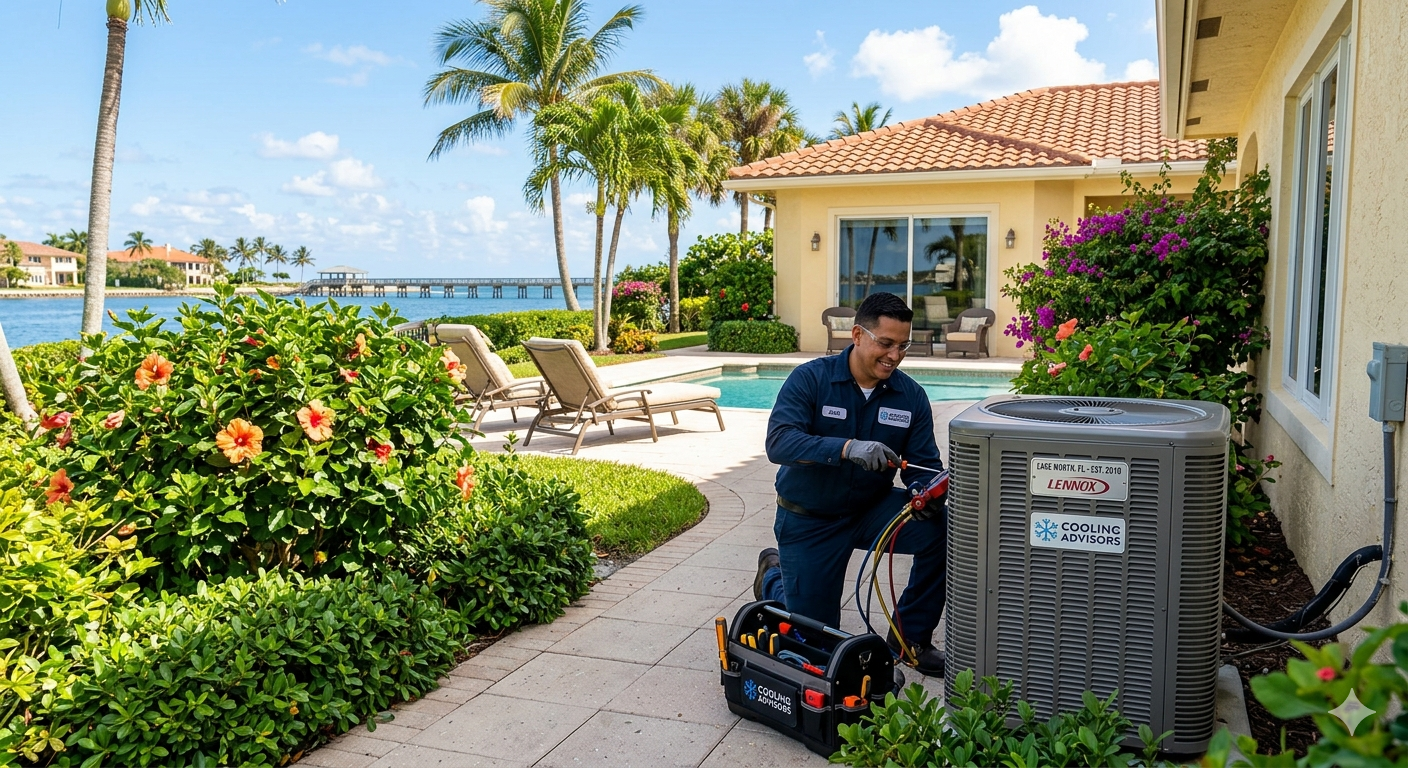
Routine maintenance slows that aging process significantly and delays the need for replacement. Keeping coils clean, checking refrigerant levels, and inspecting electrical connections once or twice a year helps your system run consistently rather than deteriorating quietly between seasons. Cooling Advisors' Care Club maintenance plan is designed to provide exactly that kind of proactive attention, which is why so many West Palm Beach homeowners rely on it to protect their equipment. Ask about Care Club membership to keep your heat pump performing at its best.
Does Coastal Salt Air in West Palm Beach Affect Your Heat Pump?
West Palm Beach's proximity to the Atlantic Ocean means salt-laden air is a real environmental factor that affects how quickly your outdoor heat pump unit ages.
Salt particles in humid coastal air accelerate corrosion on metal components, including coils, fins, and electrical contacts on the outdoor cabinet. This type of wear tends to progress faster than in inland areas, and homeowners near the Intracoastal Waterway or within a few miles of the shoreline often see corrosion-related issues earlier than those in western communities like Royal Palm Beach or Wellington. Left unaddressed, that corrosion reduces efficiency and can shorten the usable life of your outdoor unit.
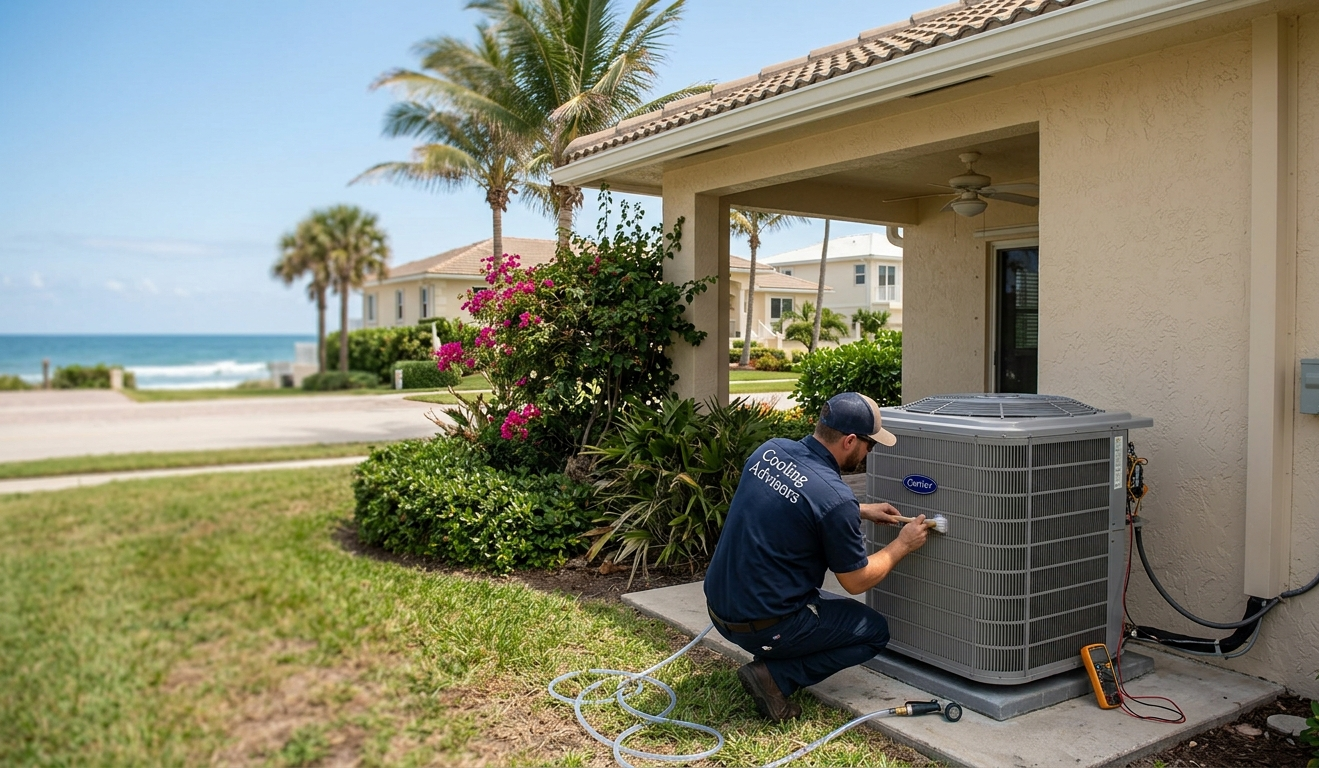
Some modern heat pump models come with corrosion-resistant cabinet materials and protective coil coatings designed specifically for coastal installations, and they are worth considering when replacing equipment near the water. Rinsing the outdoor unit with fresh water periodically is also a simple habit that reduces salt buildup between professional visits. Cooling Advisors technicians check for early corrosion signs during every maintenance visit so small wear issues do not develop into costly replacements down the road.