There is nothing quite like the relief of stepping into a perfectly cooled home on a scorching summer day. But when your air conditioner starts blowing warm air, making strange noises, or spiking your monthly energy bills, that relief quickly turns to stress.
Your cooling system is one of the most significant investments in your home. Like any complex machine, it relies on regular upkeep to run efficiently. Ignoring small issues now can lead to catastrophic system failures later.
This comprehensive guide will break down everything you need to know about keeping your system running smoothly, how to troubleshoot common problems, and when it is time to call in the professionals.
The True Cost of Skipping AC Maintenance
Many homeowners look at annual air conditioning service as an optional expense. In reality, skipping your yearly tune-up is a gamble that usually ends up costing more in the long run.
According to HVAC industry data, regular preventative maintenance can reduce the risk of costly breakdowns by up to 95%. When an air conditioner runs without regular cleanings and inspections, several negative side effects begin to compound:
- Decreased Efficiency: Dust and debris collect on the internal coils. This buildup forces the system to work harder to pull heat from your indoor air, consuming significantly more electricity.
- Shortened Lifespan: An overworked compressor and fan motor wear out years ahead of schedule. While a well-maintained system can last 15 to 20 years, a neglected unit often fails within 8 to 10 years.
- Poor Indoor Air Quality: Your HVAC system is responsible for filtering out dust, pollen, pet dander, and other airborne particles. A clogged system traps these pollutants and circulates them right back into your living space.
5 Critical Warning Signs Your AC Needs Repair
Air conditioners rarely fail without warning. Usually, they drop hints that something is wrong days or weeks before they completely shut down. Recognizing these warning signs early can save you from a complete system breakdown during a heatwave.
1. Weak Airflow
If you feel cool air coming out of your vents but it is barely a whisper, you have an airflow issue. This is often caused by a severely clogged air filter, a failing blower motor, or a blockage inside your ductwork.
2. Blowing Warm Air
If your thermostat is set to "cool" but the air coming from the registers feels lukewarm or warm, your system is struggling. The culprit could be anything from a simple tripped breaker on the outdoor unit to a more serious refrigerant leak or a failed compressor.
3. Frequent Cycling
Your AC should run in predictable, consistent cycles to maintain your home's temperature. If it is constantly turning on and off every few minutes, it is experiencing a phenomenon known as "short-cycling." This places immense wear and tear on the compressor and drastically increases your energy consumption.
4. Strange Noises
While no air conditioner is completely silent, you should never hear grinding, squealing, rattling, or clicking sounds.
- Squealing: Usually indicates a slipping or frayed belt.
- Grinding: Often points to failing motor bearings.
- Rattling: Can mean loose internal components or debris inside the outdoor condenser.
5. High Humidity Levels
A properly functioning air conditioner naturally dehumidifies your indoor air as it cools. If your home feels sticky, muggy, or damp even though the temperature seems fine, your AC is not managing moisture levels correctly.
A Homeowner's DIY Maintenance Checklist
While complex mechanical repairs should always be left to certified professionals, there are several straightforward maintenance tasks you can handle yourself to keep your system happy.
Change Your Air Filters Constantly
This is the single most important thing you can do for your HVAC system. A dirty filter restricts airflow, forcing your system to work double-time. Check your filter every 30 days, especially if you have pets or suffer from allergies. Replace it at least every 90 days.
Clear the Outdoor Condenser Unit
Your outdoor unit needs space to breathe. Over time, leaves, grass clippings, dirt, and weeds can surround the unit and choke its airflow. Maintain at least a two-foot clearance around the perimeter of the unit. Gently wash away dirt and mud from the exterior fins using a garden hose on a low-pressure setting. Never use a pressure washer, as it will easily bend the delicate aluminum fins.
Keep Vents and Registers Unobstructed
Walk through your home and ensure that furniture, curtains, rugs, or toys are not blocking your supply or return vents. Closing off vents in unused rooms does not save energy; instead, it alters the pressure balance within the system, which can damage your blower motor over time.
Understanding Your AC System: How It Actually Works
To understand why maintenance matters, it helps to understand how your air conditioner works. Many people believe that an AC creates cold air. In reality, it works by
removing heat from inside your home and transferring it outdoors.
The entire process relies on a continuous loop of a chemical compound called refrigerant, which changes states between a liquid and a gas as it moves through four primary components:
The journey begins at the indoor evaporator coil, where the cold refrigerant absorbs heat directly from your indoor air. From there, the low-pressure gas travels outside to the compressor, which pressurizes it into a hot, high-pressure gas. Next, this gas enters the outdoor condenser coil, which releases the trapped indoor heat into the outside air. Finally, the refrigerant passes through the indoor expansion valve, which depressurizes and cools it down so the entire cycle can repeat. If any single part of this delicate sequence is compromised by dirt, debris, or mechanical wear, the entire cooling cycle breaks down.
If any single part of this delicate sequence is compromised—whether by dirt buildup, mechanical wear, or a refrigerant leak—the entire cooling cycle breaks down.
What Happens During a Professional AC Tune-Up?
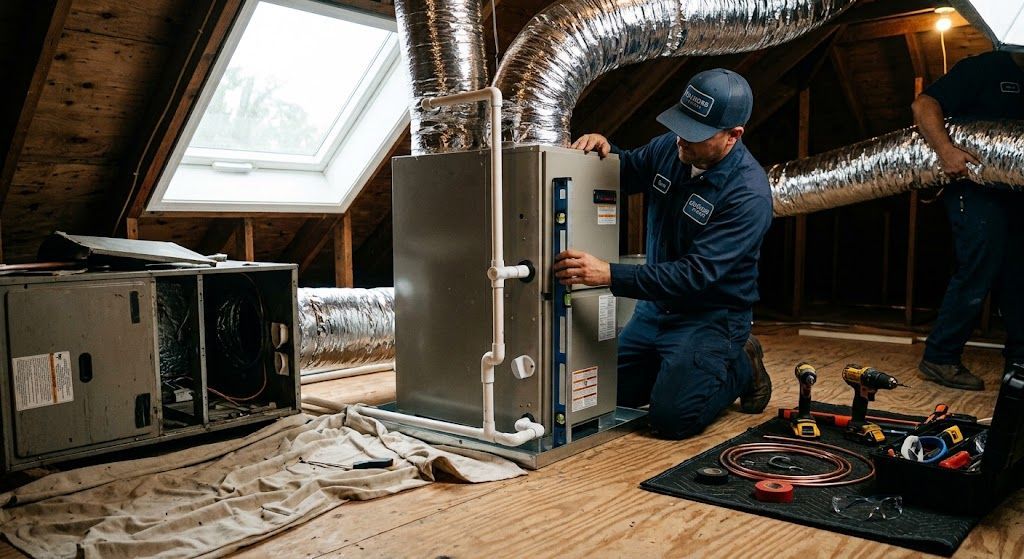
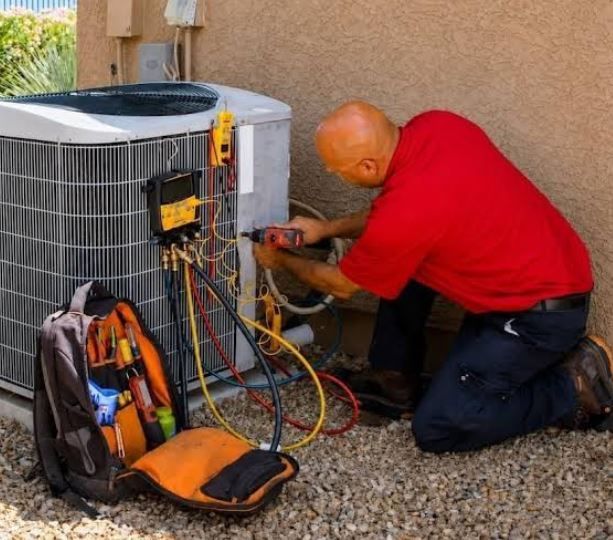
When a licensed technician arrives at your home for an annual maintenance visit, they perform a comprehensive multi-point inspection that goes far beyond what a homeowner can do alone. A standard professional tune-up generally includes the following critical steps:
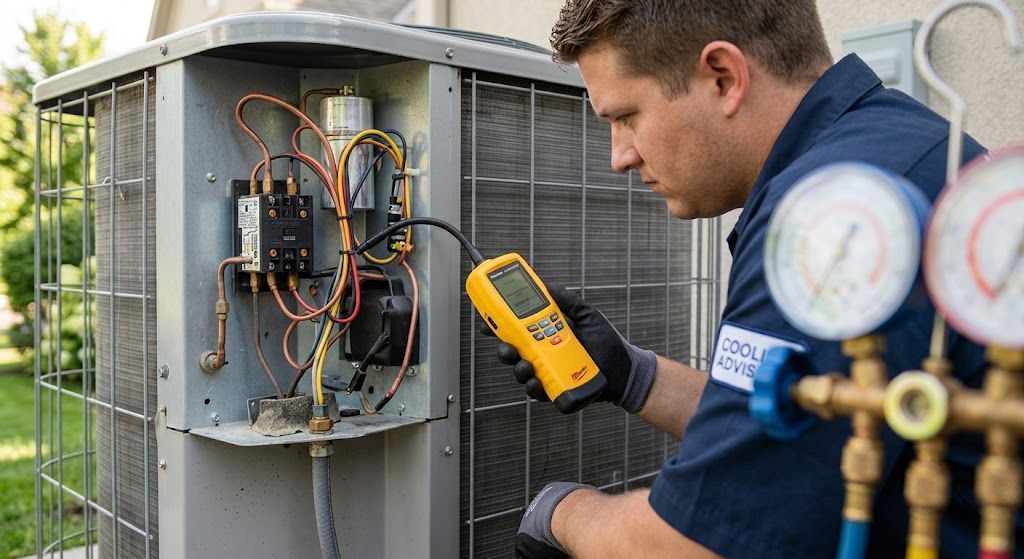
1.Electrical Inspection:
Safety and Control Checks. The technician checks and tightens all electrical connections, measures voltage and current on motors, and tests safety controls to ensure the unit shuts down properly if an issue occurs.
2.Coil Cleaning and Inspection:
Maximizing Heat Transfer. Both the indoor evaporator coil and the outdoor condenser coil are inspected. The outdoor coil is thoroughly cleaned to remove packed-in dirt, pollen, and debris that block efficient heat transfer.
3.Refrigerant Level Check:
Optimizing Performance. Operating pressures and temperatures are measured to verify that the system has the exact charge required by the manufacturer. Lower-than-normal levels indicate a leak that must be patched.
4.Condensate Drain Clearance:
Preventing Water Damage. The drain line and pan are flushed to clear away algae, mold, and sludge. This prevents the line from clogging and overflowing, which can cause severe water damage to your ceilings or walls.
5.Component Calibration:
Testing and Fine-Tuning. The thermostat is checked for accuracy, blower components are cleaned and adjusted for maximum airflow, and moving parts are lubricated to reduce mechanical friction.
Repair vs. Replace: Making the Right Decision
Eventually, every homeowner faces the dilemma of whether to sink more money into repairing an old air conditioner or to bite the bullet and invest in a brand-new system. When weighing your options, keep these three factors in mind:
The Rule of 5,000
A helpful industry benchmark is the "Rule of 5,000." Multiply the age of your cooling system by the estimated cost of the repair. If the total number is greater than $5,000, replacement is almost always the smarter financial choice. For example:
- An 8-year-old system needing a $400 fan motor repair equals
$3,200 (Repair it).
- A 12-year-old system needing a $600 compressor repair equals
$7,200 (Replace it).
System Age
The average life expectancy of a central air conditioning system is roughly 15 years. If your unit is pushing past 12 years old and begins requiring frequent repairs, it is nearing the end of its functional life. Investing in continuous repairs on an aging asset often yields a poor return on investment.
Refrigerant Type
If your air conditioner was installed before 2010, there is a strong chance it relies on R-22 refrigerant (commonly known as Freon). Due to environmental regulations, R-22 has been phased out completely. If your older unit develops a refrigerant leak, sourcing R-22 is incredibly difficult and expensive. Upgrading to a modern system utilizing eco-friendly, highly accessible refrigerants is much more practical.
Invest in Your Comfort and Peace of Mind
An air conditioner is easy to take for granted until it suddenly stops working on a blistering afternoon. By committing to routine homeowner care and scheduling annual checkups with trusted professionals, you protect your wallet, extend your equipment's lifespan, and keep your family comfortable all year long.
Do not wait for your system to break down in the middle of a summer heatwave. If you notice any warning signs or if it has been more than a year since your system was last inspected, it is time to schedule a thorough
ac repair maintenance check with a licensed professional to ensure your home remains a cool, comfortable sanctuary.